How to Ask Better Questions on Your Digital Restaurant Menu
A guest gives dinner four stars. The manager is pleased, but the rating leaves several questions unanswered. Was the food excellent, and the wait frustrating? Did the guest enjoy the main course but skip dessert because nothing appealed to them? Would a clearer description have persuaded them to try the chef's special? A score can show how someone felt without explaining what the restaurant should change.
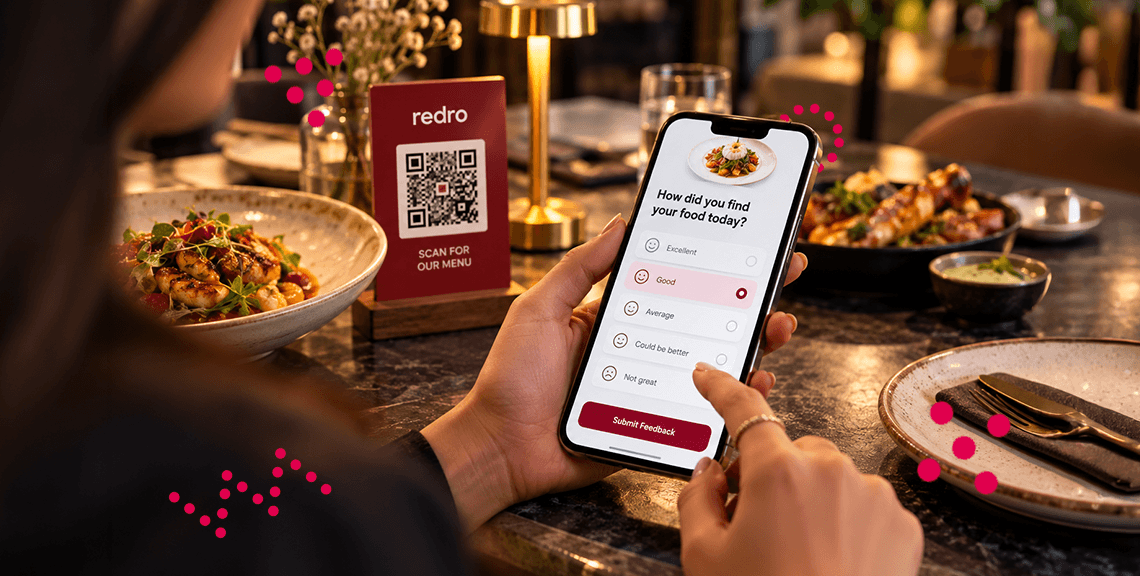
Customer surveys and polls become useful when they address a decision the team can actually make. A digital restaurant menu provides a place to ask for feedback near the choices guests are considering. The challenge is to protect the dining experience while gathering answers specific enough to guide an operational or commercial improvement. Start with the decision, then design the question.
Give Every Digital Restaurant Menu Survey a Decision
Before writing anything, complete this sentence: “Depending on the answer, we will change…” If the team cannot finish it, the question probably does not belong in the survey. Asking whether customers like variety is unlikely to settle a purchasing decision. Asking which option was missing from the weekday lunch selection can help determine what to trial next.
Separate the problem from the proposed solution. If a lunch dish sells poorly, asking whether guests want a discount assumes price is the obstacle. They may dislike its ingredients, misunderstand the portion or simply prefer something quicker to eat. Ask what stopped them from choosing it, where appropriate, and include “I did not consider this dish”. Otherwise, the restaurant risks cutting a profitable price to solve a visibility problem.
Define the commercial check alongside the question. A smaller-portion request might justify a limited trial, but the decision should also consider recipe cost, preparation time, waste and contribution per guest. A popular suggestion is a hypothesis to test, not an instruction to permanently expand the menu.
Find the Missing Answer Before Writing the Poll
Answer options shape what customers report. A Pew experiment, described in its questionnaire guidance, found that 43% of respondents to an open-ended political question gave answers outside the categories offered in a closed version; only 8% did so when those categories were supplied. This was not restaurant research, but it demonstrates a relevant design risk: a tidy list can conceal concerns the business has not anticipated.
Start by listening to the language guests and waiters already use. Brief conversations and a small exploratory survey can reveal whether “too heavy”, “unclear ingredients” or “not enough time” are recurring explanations. Build a focused poll around those themes, with an appropriate “something else” or “none of these” option. Avoid asking whether a dish was “delicious and good value”, because agreement cannot tell you which part worked.
The same discipline improves marketing. If guests repeatedly struggle to understand an unfamiliar dish, their wording can guide the next description test. This practical guide to menu descriptions explains how to make that information more useful. On a QR code menu, the aim is to identify the information a guest needs, rather than ask them to endorse the restaurant's preferred language.
Keep the Request Easy and Appropriate to the Moment
Every question competes with conversation, eating and the rest of the visit. A Pew analysis reported an average question nonresponse rate of around 18% for open-ended items in its American Trends Panel, compared with roughly 1–2% for closed-ended items. These are public opinion survey figures, not restaurant response rate benchmarks. They nevertheless support a practical principle: typing an explanation demands more effort than selecting an answer.
Use one short poll when one choice is all you need. Reserve a longer survey for a defined investigation, and keep participation optional. Test the wording on a phone before publishing it. A question about finding vegetarian choices belongs near the browsing experience; one about portion satisfaction makes sense after the food has arrived. Do not ask guests to evaluate something they have not experienced.
Keep learning separate from immediate assistance. A Cornell study of 802 travellers found that complaint channels varied with the nature and severity of restaurant problems, with some serious complaints communicated in writing rather than face-to-face. A survey, therefore, cannot replace attentive service. Make it clear that guests needing help now should speak to the team, and never imply that feedback is monitored live unless it genuinely is.
Read Responses Alongside Behaviour and Service Reality
A voluntary survey describes the people who answered it, not automatically the whole dining room. Record the number of responses and the period covered before interpreting percentages. A handful of comments from Friday dinner should not determine the weekday lunch offer. Ask whether the invitation was made consistently, whether some guests found it harder to participate and whether staff encouraged only visibly happy tables.
Language also affects whose voice reaches the manager. Keep questions plain and check translated wording for equivalent meaning. The guidance on multilingual menus is relevant here: a translated phrase can be technically correct and still be confusing. A digital restaurant menu should make it easy to give an honest answer, without turning a short question into another task that requires a waiter to explain it.
Review feedback with separate sales records, menu browsing patterns and staff observations. If guests request a lighter lunch but do not order the trial dish, investigate its placement, price and description before concluding the idea failed. Do not assume individual survey answers can be linked to purchases. Aggregate patterns can still help, provided the team distinguishes what customers say from what the restaurant actually observes.
Make One Visible Improvement Before Asking Again
Give one manager responsibility for reviewing responses, choosing a change and setting a review date. Keep a simple decision log covering the question, finding, action and commercial result. Test one meaningful change at a time, where possible. When appropriate, tell guests how their feedback influenced changes, such as a clearer lunch selection or a revised serving option, without suggesting that every request will be adopted.
Redro supports this approach through customer surveys and polls, menu and customer behaviour analytics, and a CMS that lets restaurants update content anytime at no extra cost. Its QR code menu can bring feedback closer to the browsing experience, while one source of truth keeps online and in-restaurant information consistent. The value comes from asking a question the team can act on, checking the answer against service reality and following through before requesting more of the guest's time.

Join the Culinary Revolution!
Transform your dining experience with Redro. Boost efficiency, delight diners, and fire up your sales. It’s more than a menu—it’s a game-changer for your brand.